How Much Should You Pay a Web Design Agency? Pricing, ROI, and What to Expect
Web design agency pricing is driven by project scope, custom design versus template customisation, inclusion of SEO and AI search optimization, and ongoing support requirements. The most important question is not how much a website costs, but what return it generates. A cheap website that fails to rank in Google, does not get cited by AI search engines, and does not convert visitors costs far more in lost revenue than a well-built site that performs consistently.
Agencies that include comprehensive SEO, schema markup implementation, and AI search optimization as standard charge more than those treating design and search as separate services. This upfront investment saves significantly long-term. Retrofitting SEO onto a poorly built website after launch is far more expensive and less effective than building it correctly from the start.
AI search visibility is adding an entirely new dimension to website ROI in 2026. Visitors from AI search are 4.4x more valuable than traditional organic visitors. As more purchasing decisions are influenced by AI-generated recommendations from tools like ChatGPT, Google AI Overviews, and Perplexity, websites that get cited by AI engines gain a direct, measurable advantage in brand visibility and customer acquisition.
This article provides a transparent breakdown of what drives web design pricing, how to evaluate return on investment through business outcomes rather than design aesthetics, and what every web design proposal should include regardless of budget: discovery and strategy, SEO integration, schema markup, Core Web Vitals optimization, content strategy guidance, and post-launch monitoring.
What Factors Drive Web Design Agency Pricing?
Web design agency pricing is driven by project scope and page count, custom design versus template customisation, inclusion of SEO and AI search optimization, and ongoing support requirements. A five-page brochure site costs significantly less than a thirty-page custom build with e-commerce, but the cheapest option rarely delivers the best return on investment.
How Does Scope and Complexity Affect Cost?
The number of pages, complexity of features, custom functionality requirements, and content management needs are the primary cost drivers. E-commerce integration, membership systems, and advanced interactive elements all increase development hours and cost.
Why Does SEO Integration Increase the Price?
Agencies that include comprehensive SEO, schema markup implementation, and AI search optimization charge more because these require specialist expertise and additional development time. However, research consistently shows that paying more upfront for integrated SEO saves significantly long-term. Bolting SEO onto a poorly built website after launch is far more expensive than building it right from the start.
For a full guide on evaluating what an agency should include, see How to Choose a Web Design Agency That Actually Delivers SEO and AI Search Results.
Custom Design vs Template Customisation
Fully custom design work requires more hours from more senior team members. You are paying for original design concepts, bespoke code, and an architecture tailored specifically to your business goals. Template-based projects reduce these costs but come with the performance and flexibility trade-offs covered in our guide to Custom Web Design vs Templates: Which Gets Better SEO and AI Search Results?
Ongoing Support and Maintenance
Some agencies include post-launch support in their project pricing. Others charge separately for hosting, maintenance, security updates, and performance monitoring. Understand what is included and what will be charged additionally before you commit.
How Should You Evaluate ROI on a Website Investment?
Evaluate website ROI by tracking business outcomes: leads generated through organic search, revenue from website conversions, growth in search visibility over time, and AI search citation frequency. A website that costs more upfront but generates consistent, measurable results is a better investment than a cheaper site that sits idle and invisible.
AI search visibility adds a new ROI dimension. Visitors from AI search are 4.4x more valuable than traditional organic visitors. As more purchasing decisions are influenced by AI recommendations, being cited by AI search engines translates directly to brand visibility and customer acquisition. Your agency should help you track this.
For more on how AI search visibility works and why it matters, see AI Search Optimization for Business Websites: What Your Agency Should Be Doing in 2026.
What Should Every Web Design Proposal Include?
Every web design proposal should include discovery and strategy, SEO integration with keyword research and site architecture planning, schema markup and structured data implementation, Core Web Vitals optimization with specific benchmarks, content strategy guidance, and post-launch monitoring for at least 90 days. If a proposal excludes these elements, you are likely paying for a digital brochure, not a business asset.
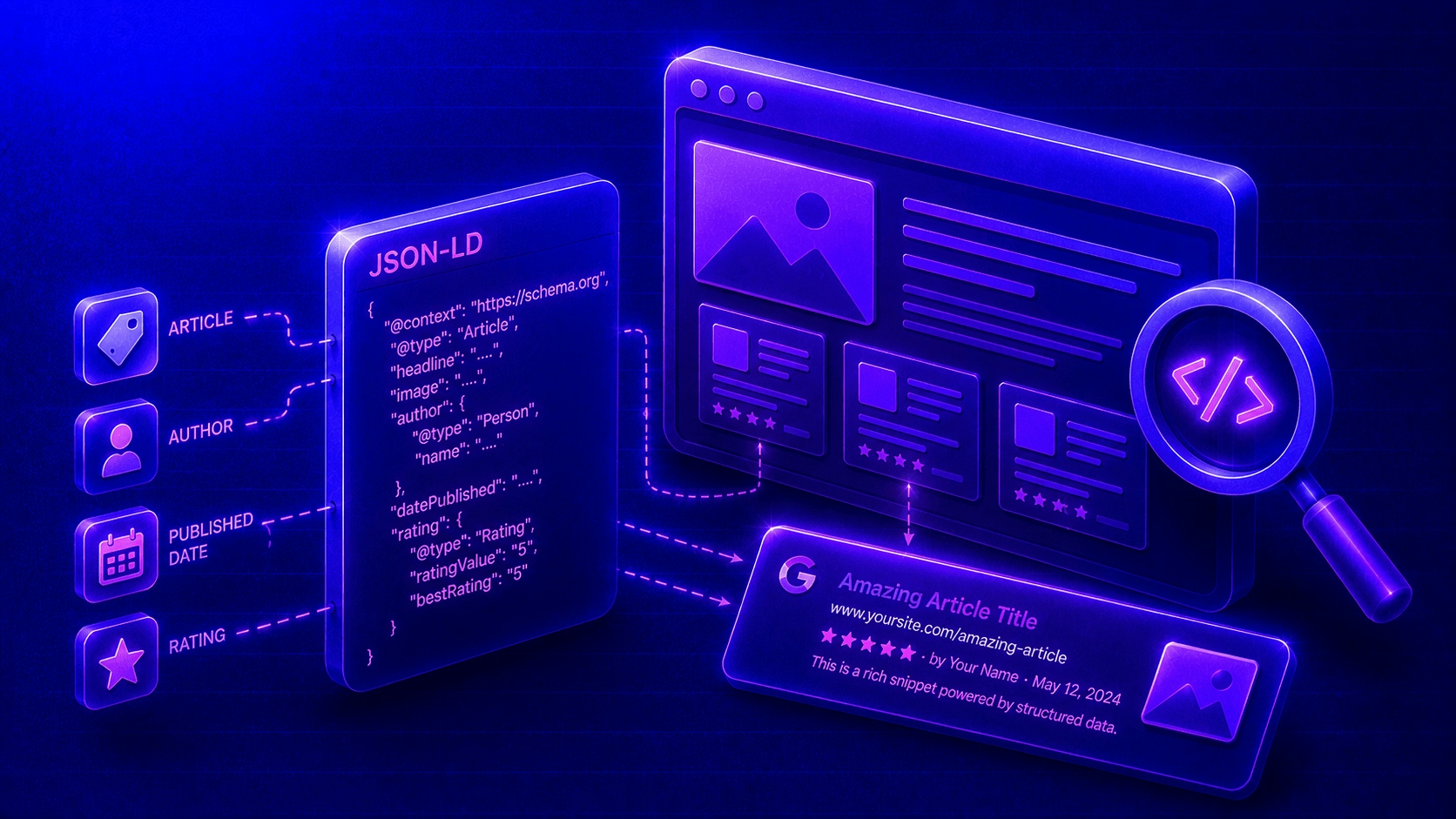
If your proposal does not mention schema markup and structured data, that is a significant red flag. In 2026, structured data is not an optional add-on. It is a foundational requirement for AI search visibility.
The Proxy Approach
At Proxy, we believe in transparent pricing and measurable results. Every project includes SEO integration, AI search optimization, schema markup, and technical performance optimization as standard. We do not sell these as add-ons because we do not believe you can build a high-performing website without them.
If you are evaluating web design agencies and want to understand what a results-focused investment looks like for your specific business, get in touch. We will give you an honest assessment of what your project needs, what it should cost, and what results you can realistically expect.
Frequently Asked Questions
How much does a website cost in 2026?
Website costs in 2026 vary from a few thousand pounds for template-based brochure sites to tens of thousands for fully custom, SEO-optimized, AI-search-ready websites. The right investment depends on your business goals, competitive landscape, and how critical search visibility is to your revenue.
Why do some web design agencies charge so much more than others?
Price differences reflect scope, expertise, and included services. Agencies charging more typically include SEO integration, AI search optimization, schema markup, performance engineering, and post-launch support as standard. Cheaper agencies often treat these as separate billable add-ons or omit them entirely.
Is a cheap website a bad investment?
A cheap website is a bad investment if it fails to rank in search, does not get cited by AI engines, and does not convert visitors. The cost of lost opportunities from an invisible website far exceeds the savings from choosing the cheapest option. Evaluate total return, not just upfront cost.
What ongoing costs should I expect after my website launches?
Ongoing costs typically include hosting, security updates, content updates, performance monitoring, and SEO maintenance. Some agencies bundle these into retainers. Budget for regular content updates as well, since AI search engines heavily prioritize fresh, recently updated content.
How do I measure my website’s ROI?
Measure website ROI through organic search traffic growth, lead generation from the website, revenue attributable to website conversions, keyword ranking improvements, and AI search citation frequency. Track these metrics monthly and evaluate trends over 6–12 months for accurate ROI assessment.
Should SEO be included in my web design project or billed separately?
SEO should be integrated into your web design project from day one, not billed as a separate service. Separating design from SEO creates architectural problems that are expensive to fix later. Agencies that include SEO as standard deliver websites that perform better from launch.