
Schema Markup and Structured Data: The Hidden Advantage Most Web Designers Ignore
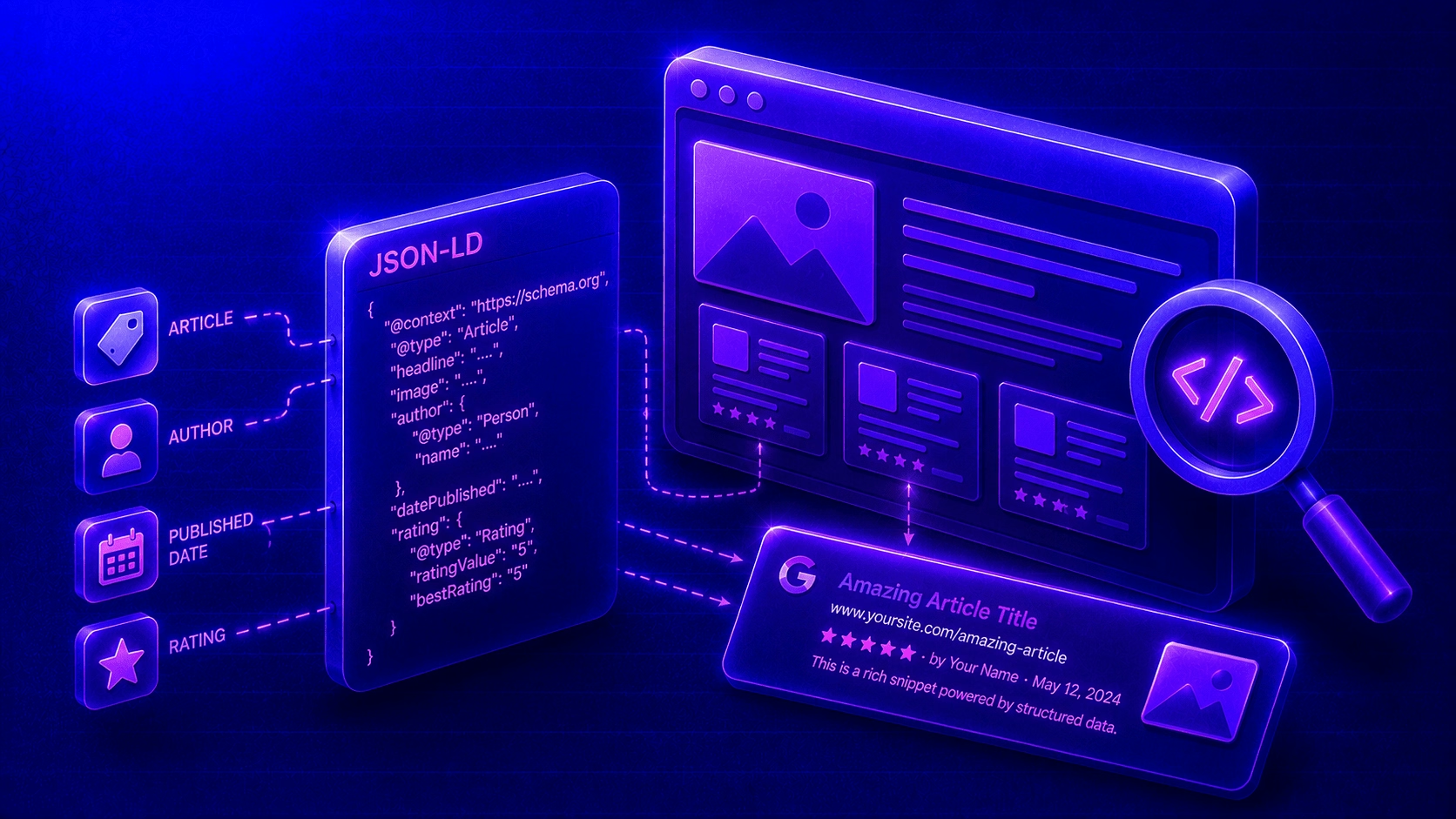
Schema markup is structured data code in JSON-LD format that tells search engines and AI systems exactly what your website content represents. 72% of first-page Google results use schema markup. Sites with comprehensive schema (Organization, Article, FAQ, BreadcrumbList) are cited 2–3x more frequently by AI engines like ChatGPT, Perplexity, and Google AI Overviews than equivalent sites without structured data.
In 2026, schema markup has evolved from a minor SEO enhancement into a critical requirement for both traditional and AI search visibility. Google and Microsoft have both publicly confirmed that their AI systems use structured data to understand and prioritize content. ChatGPT confirmed in 2025 that it uses structured data to determine which products appear in its results. Products with comprehensive schema appear in AI recommendations 3–5x more frequently than those without.
Despite this proven impact, the majority of web designers do not implement schema markup. They either lack the technical knowledge, do not consider it their responsibility, or assume an SEO plugin handles it adequately. This creates a significant competitive advantage for businesses that invest in proper, comprehensive structured data implementation.
This article explains how schema markup works, why it matters for AI search citation, which specific schema types every business website needs, and what your web design agency should deliver as standard. The essential schema stack includes Organization schema for entity identity, Article schema for content attribution and freshness signals, FAQ schema for the highest AI citation impact, and BreadcrumbList schema for site structure context.
What Is Schema Markup and How Does It Work?
Schema markup is structured data code added to your website in JSON-LD format that provides explicit, machine-readable context about what your content represents. It tells search engines and AI systems who you are, what you do, and what authority your content carries, eliminating the guesswork that leads to missed citations and misattribution.
For example, without schema, an AI engine looking at your homepage must figure out that your business is a web design agency in a specific location. With Organization and LocalBusiness schema, that information is presented in a format AI systems can instantly understand and use.
Why Does Schema Matter More in 2026 Than Ever Before?
Schema matters more in 2026 because AI search engines rely on structured data to quickly verify and extract factual information from millions of sources. Google and Microsoft have both confirmed that structured data helps their AI systems. Research shows sites with proper schema are cited over 3x more often by AI engines. 72% of first-page Google results already use schema markup.
ChatGPT confirmed in 2025 that it uses structured data to determine which products appear in its results. This shifted schema from an SEO tactic to a requirement for making your business understood by AI.
For context on why this matters when choosing an agency, see How to Choose a Web Design Agency That Actually Delivers SEO and AI Search Results.
What Schema Types Does Every Business Website Need?
Every business website needs at minimum Organization schema (site-wide identity), Article schema (blog content attribution), FAQ schema (highest AI citation impact), and BreadcrumbList schema (site structure context). LocalBusiness schema is essential for location-based businesses. This stack provides AI engines with comprehensive machine-readable context about your business.
Organization and LocalBusiness Schema
This is your foundational layer. It tells search engines and AI systems who you are, what you do, where you are located, and how to contact you. Every business website should have this implemented site-wide. It establishes your business as a defined entity in AI knowledge graphs.
Article Schema
Applied to every blog post and content page, Article schema identifies content type, author, publication date, and publisher. This helps AI engines evaluate authority and recency. Include dateModified to signal content freshness, a critical factor given that 76.4% of ChatGPT’s most-cited pages were updated within 30 days.
FAQ Schema
FAQ schema has the highest impact on AI search citation rates. It provides AI engines with pre-packaged question-and-answer formatted content that maps directly to how users query AI tools. Use one FAQPage schema block per page, ensure questions appear verbatim on the page, and keep answers self-contained at 40–60 words.
BreadcrumbList Schema
This helps AI systems understand your site’s structure and hierarchy, providing context about how individual pages relate to each other and to your broader content architecture.
What Should Your Web Design Agency Deliver?
Your web design agency should deliver comprehensive schema markup implementation as a standard part of every project, not an optional extra. This includes all relevant schema types implemented during the build, validation using Google’s Rich Results Test, and ensuring markup accurately reflects visible page content. Mismatches between schema and content are penalised by AI engines.
If your current agency does not implement schema, or treats it as an add-on, that is a significant red flag. For more on evaluating agency capabilities, read AI Search Optimization for Business Websites: What Your Agency Should Be Doing in 2026.
Many of the common SEO mistakes in website redesigns stem from failing to implement structured data during the build. Schema should be part of the project from day one, not retrofitted after launch.
At Proxy, structured data implementation is a core part of our web design process. We implement comprehensive schema markup on every site we build because we know it directly impacts visibility in both traditional search results and AI-generated answers.
Frequently Asked Questions
What is JSON-LD schema?
JSON-LD (JavaScript Object Notation for Linked Data) is the preferred format for implementing schema markup on websites. It sits in a dedicated script block separate from your HTML content, making it easy for AI crawlers to parse without interference from page structure. Google officially recommends JSON-LD for AI-optimized content.
Is schema markup hard to implement?
Schema markup implementation requires technical knowledge of JSON-LD format and Schema.org vocabulary. While SEO plugins can generate basic schema, comprehensive implementation tailored to your specific business requires expertise. This is why it should be a standard deliverable from your web design agency.
Does schema guarantee AI search visibility?
Schema does not guarantee AI search visibility, but it significantly improves the chances. Structured data provides AI engines with clear, unambiguous signals about your content, making it easier to parse, verify, and cite. Combined with quality content and entity authority, it is one of the strongest technical signals for AI citation.
How do I test my schema markup?
Test schema markup using Google’s Rich Results Test for validation, Google Search Console for error monitoring, and manual queries in ChatGPT, Perplexity, and Google AI Overviews for citation checking. Ensure schema matches visible page content exactly, as mismatches can result in penalties.
What is the most important schema type for AI search?
FAQ schema has the highest impact on AI search citation rates because it provides pre-packaged question-and-answer content that maps directly to how users query AI tools. Combined with Article and Organization schema, it forms the essential stack for AI visibility.
Should schema markup be included in web design projects?
Yes. In 2026, schema markup should be a standard deliverable in any web design project. It is not an optional extra or an SEO add-on. Agencies that do not include structured data implementation are delivering websites that are significantly less visible to AI search engines.