Custom Web Design vs Templates: Which Gets Better SEO and AI Search Results?

Custom web design delivers better SEO and AI search results than templates because every element is purpose-built: clean code with no bloat, site architecture designed around target keywords, comprehensive tailored schema markup, and full control over heading hierarchies and content structure. Templates impose structural limitations, include unnecessary code that slows page speed, and typically use generic or no schema implementations.
The search performance gap between custom and template websites is measurable. Templates are built to serve a broad market, which means unnecessary JavaScript libraries, bloated CSS files, and generic page structures that increase load times and reduce crawl efficiency. Custom builds eliminate this bloat, resulting in faster Core Web Vitals scores, which Google uses as a ranking signal and AI crawlers use when evaluating source quality.
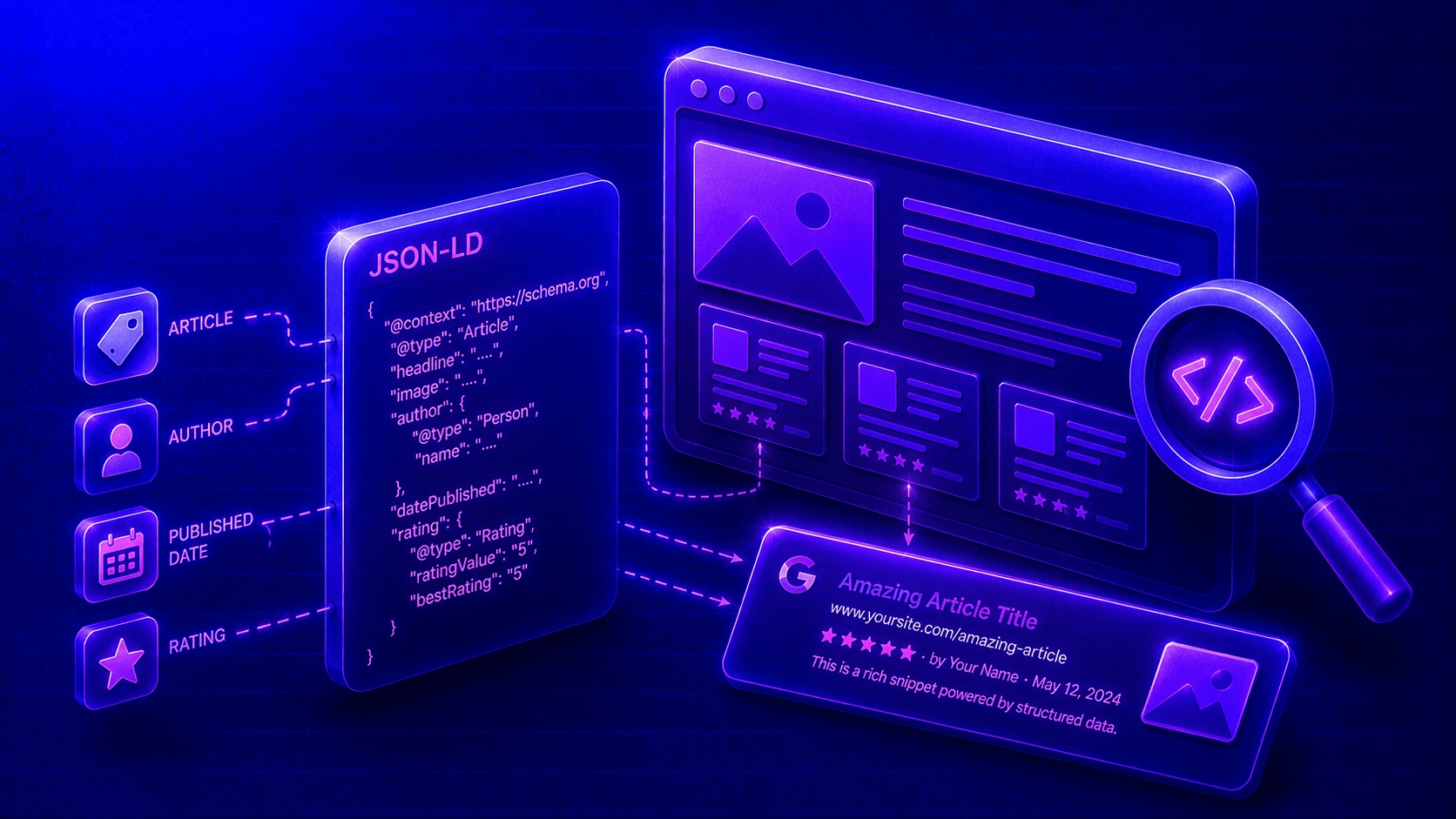
For AI search visibility, the advantage is even clearer. AI engines favour sources with clear entity identity and machine-readable structure. Custom websites can implement comprehensive JSON-LD schema tailored to your specific business. Sites with this level of structured data are cited 2–3x more frequently by AI engines. Templates typically use generic schema if they include it at all, meaning they miss the signals that drive AI citation.
This article compares custom web design and templates across SEO performance, AI search visibility, page speed, content flexibility, and long-term return on investment. It explains when templates can work, when custom design is the better investment, and what to look for in either approach.
What Are the SEO Limitations of Website Templates?
Website templates impose SEO limitations because they are built to serve a broad market. They include unnecessary JavaScript libraries, bloated CSS files, and generic page structures that slow load times, reduce crawl efficiency, and constrain your site architecture, heading hierarchy, and internal linking options to what the template supports rather than what your SEO strategy requires.
Template themes force your content structure to adapt to their design rather than the other way around. This is the opposite of how SEO-first design should work. Your content strategy should dictate site structure, not a pre-built template.
Why Does Custom Web Design Deliver Better SEO Results?
Custom web design delivers better SEO results because every line of code serves a specific purpose. The site architecture is designed around your target keywords and content strategy. Page speed is optimized from the ground up with no unnecessary code. You have complete control over schema markup, heading structures, and the technical elements that AI search engines use to understand and cite your content.
For a full breakdown of how SEO should be integrated into the design process, see How to Choose a Web Design Agency That Actually Delivers SEO and AI Search Results.
How Does This Affect AI Search Visibility?
Custom websites are significantly better positioned for AI search because they can be structured from the ground up to present your business as a well-defined entity with machine-readable information about services, expertise, and authority. Templates use generic schema implementations if they include schema at all. Custom sites implement comprehensive, tailored structured data that gives AI engines exactly the context they need.
AI search engines favour content from sources that demonstrate clear entity identity. Custom sites with comprehensive schema are cited 2–3x more frequently than template sites with minimal or no structured data. For a deeper guide on what schema your site needs, read Schema Markup and Structured Data: The Hidden Advantage Most Web Designers Ignore.
When Can Website Templates Work for SEO?
Templates can work for SEO when a lightweight, well-coded template is properly optimized by stripping unnecessary code, implementing comprehensive schema markup, building strategic site architecture, and optimizing for Core Web Vitals. The key is the level of technical optimization applied after template selection, which most template-based projects do not include.
A well-optimized template can outperform a poorly built custom site. But most template projects skip the technical work that makes the difference between a website that ranks and one that does not. If you are planning a redesign on a template, make sure your agency avoids the common SEO mistakes that destroy search visibility.
Which Should You Choose for Your Business?
Choose custom web design if search performance is critical to your business growth. The upfront investment is higher, but the return in search visibility, AI search citations, and long-term performance makes it worthwhile for businesses that rely on being found online. Templates suit very limited budgets or simple requirements where search is not a primary growth channel.
To understand the cost difference and how to evaluate ROI on either approach, see How Much Should You Pay a Web Design Agency? Pricing, ROI, and What to Expect.
At Proxy, we build custom websites engineered for search performance. Every site we deliver is architecturally optimized, technically sound, and built with the structured data needed to compete in both traditional and AI search.
Frequently Asked Questions
Is custom web design worth the extra cost?
Custom web design is worth the extra cost for businesses where search visibility drives revenue. Custom sites deliver better page speed, cleaner code, tailored site architecture, and comprehensive schema markup. The higher upfront investment generates measurably better search performance and AI search citation rates over time.
Can a template website rank on Google?
A template website can rank on Google if it is properly optimized with clean code, strategic site architecture, proper heading hierarchy, and comprehensive schema markup. However, most template-based projects do not include this level of optimization, resulting in underperformance compared to custom builds.
Do templates affect page speed?
Yes. Templates typically include unnecessary JavaScript, bloated CSS, and features you do not need that your website still has to load. This directly impacts Core Web Vitals scores, which are ranking factors for both Google and AI search engines. Custom builds eliminate this bloat.
What is the best CMS for SEO?
The best CMS for SEO depends on your specific requirements. What matters more than the CMS itself is how your agency implements SEO within it: clean URLs, proper heading structures, fast loading, comprehensive schema markup, and flexible content architecture. Your agency should recommend a CMS based on your SEO needs, not their convenience.
How do I know if my template is hurting my SEO?
Check your Core Web Vitals scores in Google Search Console, audit your page source for unnecessary scripts and CSS files, verify your schema markup implementation, and compare your site speed against competitors. If your template scores poorly on these metrics, it is likely hurting your SEO performance.
Can templates support schema markup?
Templates can support schema markup, but most use basic or generic implementations that do not adequately represent your specific business. SEO plugins add some schema, but comprehensive implementation tailored to your services, location, and content typically requires custom development or manual configuration.